Mummy MOT in Saffron Walden
Helping you recover, rebuild strength and feel confident in your body after birth.
Whether you're recovering from a vaginal birth or a caesarean section, experiencing pelvic floor symptoms, or simply unsure whether your body has fully recovered, I offer specialist postnatal physiotherapy to help you understand your body and return to the activities you love.
Becoming a mum is life-changing, and recovery looks different for every woman. Whether you're 6 weeks, 6 months or 6 years postnatal, it's never too late to check in with your body and prioritise your own health.
5.0 on Google · Certified Mummy MOT practitioner · HCPC registered
Who it's for
- Whether you gave birth 6 weeks, 6 months or 6 years ago
- After a vaginal birth or a caesarean section
- If you want to return to exercise safely and confidently
- If you have symptoms you're unsure about
Every mum. You don't need symptoms to book.
Symptoms you might be unsure about
- Leaking urine (urinary incontinence)
- Pelvic floor problems, heaviness or prolapse
- Tummy separation (diastasis recti) or core weakness
- Back or pelvic pain, or painful sex
- C-section scar pain
What's included
- A pelvic floor check
- An abdominal and core assessment, including any tummy separation
- A check of your posture, movement and pelvic alignment
- A C-section or tear scar assessment, with self-massage techniques taught
- A bladder and bowel review
- Your findings explained, and a plan with exercises to start straight away
About the Mummy MOT
The Mummy MOT is a specialist postnatal pelvic health assessment that supports mums with recovery, confidence with movement and a safe return to exercise.
Pregnancy and birth place huge demands on your pelvic floor, tummy muscles and back. Many common postnatal symptoms, such as leaking, heaviness, tummy separation, back or pelvic pain, painful sex and scar discomfort, can improve with the right assessment and a tailored plan. And if you feel fine, a Mummy MOT is still a valuable check that your body is ready for the activities you want to get back to.
What happens at your appointment
Talk
Kate listens to your pregnancy and birth story: your labour and delivery, whether vaginal or C-section, any symptoms such as bladder leaking, bowel issues or pain, and what you want to get back to. Everything is confidential.
Assess
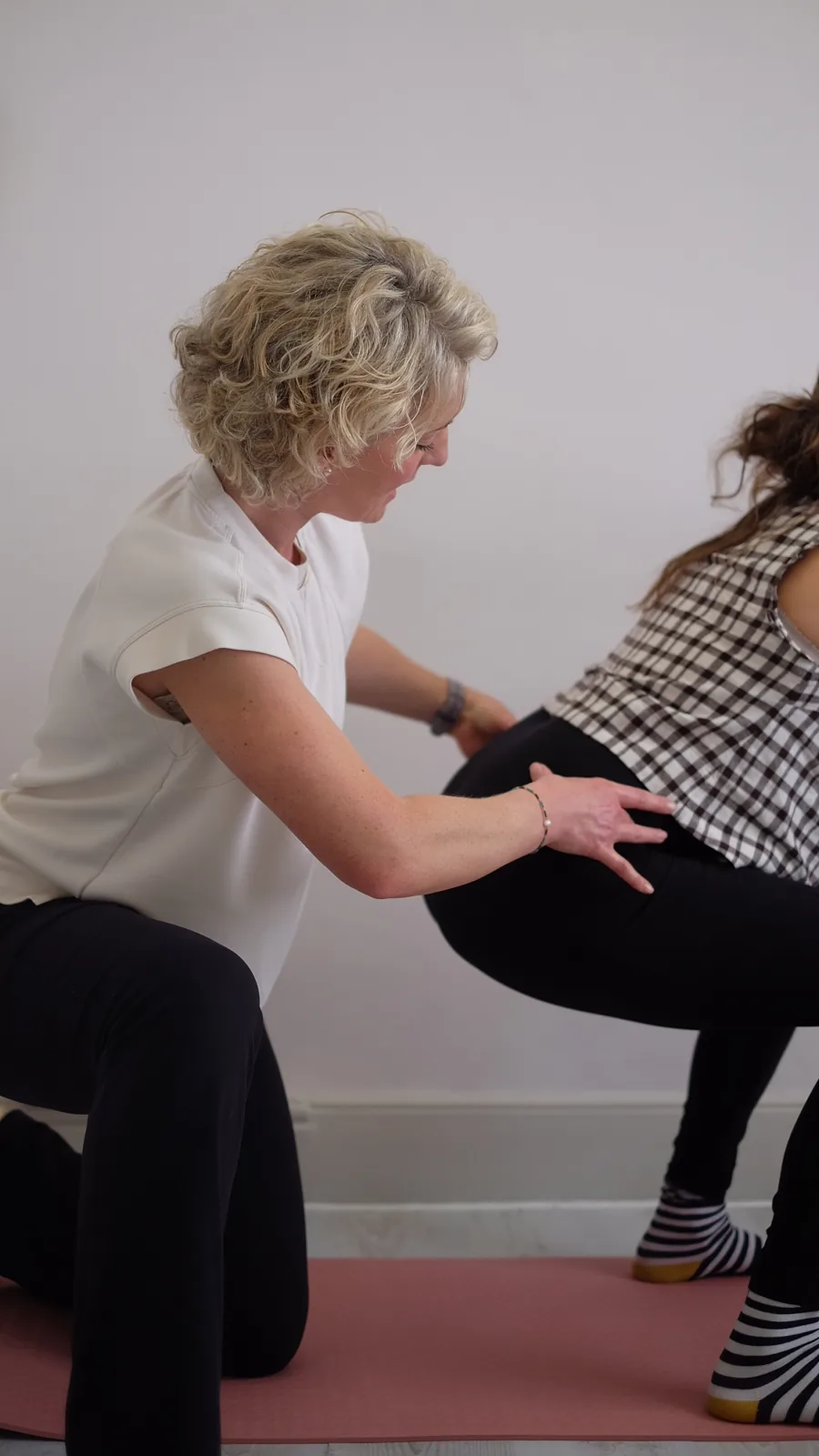
Kate checks your posture, movement and pelvic alignment, and your tummy for any separation (diastasis recti). An internal pelvic floor examination is encouraged, to assess strength, tone and control, but it's optional and you can decline. Any C-section or tear scars are checked too, and Kate shows you how to massage your own scar.
Plan
Kate explains her findings and creates your treatment plan, starting with gentle core and pelvic floor exercises, plus advice to help you return to exercise, work and daily life without pain.
What mums say
Rated 5.0 on Google · Read all reviews on Google →
Mummy MOT questions
I feel fine. Do I still need a Mummy MOT?
You don't need to have symptoms to book. An assessment can help you understand your pelvic floor and abdominal recovery, discuss how to return to exercise safely and what to look out for as you progress, and identify any areas where tailored advice may help.
Why do I feel heaviness or dragging in my vagina after giving birth?
It's normal to feel some heaviness in the vagina for the first few weeks after a vaginal birth. However, if heaviness, pressure or a bulging sensation persists, it can be a sign of pelvic organ prolapse. A detailed pelvic assessment, including an internal examination, can help establish what may be contributing to your symptoms and explore options for managing them.
Why do I still leak urine when I run, jump or sneeze after having a baby?
Bladder leakage can happen when the pelvic floor and surrounding muscles aren't yet managing the demands placed on them. A Mummy MOT assesses your pelvic floor's function, strength, coordination and response to pressure, to guide an individual rehabilitation plan.
Is my tummy gap (abdominal separation) normal, and can I improve it?
Abdominal separation, known as diastasis recti, is common after pregnancy. Physiotherapy focuses less on the appearance or width of the gap and more on how well your abdominal wall works: muscle tension, strength, coordination and your ability to manage load through your trunk and lower body. The aim is to restore functional strength and control, so your body manages everyday activities and a return to exercise with greater confidence.
My C-section scar still feels tight, numb or uncomfortable. Can physiotherapy help?
Once your C-section scar has healed, physiotherapy can help with scar sensitivity, restricted tissue movement and related abdominal or pelvic discomfort. Reduced sensation or mobility around the scar can affect how you move and manage load, sometimes contributing to back pain. Your assessment looks at how your scar, abdominal function and overall movement are connected, to guide your recovery.
You might also need
Book your Mummy MOT
£120 · 90 minutes · Saffron Walden
Refer a friend and receive 10% off your next session.
Not sure yet? Book a free 15-minute call, or message Kate on WhatsApp. See our booking and cancellation terms.